
Water Level And Bucket Check
We start with the water level and a bucket test. The bucket shows whether the loss is evaporation or a real leak.
A pool visit covers the signs, the tests, and a clear account of what we found. Each step below is part of that visit.
We start with the water level and a bucket test. The bucket shows whether the loss is evaporation or a real leak.
We walk the pool and look for cracks in the shell and plaster, loose tile, and worn fittings at the skimmer, the light, and the returns.
You get a written account of what we found, where the leak appears to be, and what repair options exist.
Pressure testing checks the lines that serve the pool. Acoustic listening picks up the sound of water leaving a line.
Pool structural leak detection finds a leak in the shell of a pool, the concrete or gunite body that holds the water, rather than in the equipment or the plumbing. We use visual inspection, pressure testing, acoustic listening, and thermal imaging to narrow the spot down. The aim is to know where the water is leaving before any repair starts.
A pool in Lakeland loses some water to evaporation, and a hot, dry, windy day can take more than usual. A bucket test separates evaporation from a leak. If the leak is in a line that runs away from the pool, under the yard, that is underground leak detection in Lakeland.
A pool visit follows four plain steps. You know what is happening at each one.
Schedule
Call +1 (863) 265-8125 and tell us what you noticed. We talk through the signs with you first.
Check
We run a bucket test, walk the shell, and check the skimmer, the light, and the fittings for cracks and wear.
Test
We pressure test the lines, listen with acoustic gear, and scan wet areas with thermal imaging.
Report
You get a written account of the findings, the marked spot, and the repair options to consider.
Pressure Testing Equipment
We pressurize a line and watch the reading. A steady drop means water is leaving the line somewhere.
Acoustic Listening Devices
A sensor picks up the sound of water escaping from a pipe or a fitting. The loudest point is usually the closest to the leak.
Thermal Imaging Cameras
A camera scans the deck and the ground around the pool for cool, damp patches where water is collecting.
Moisture Meters
The meter reads damp in the deck and the ground beside the pool. Damp that will not dry is a sign worth checking.
Visual Inspection
We walk the shell above and below the water line and look for cracks, cold joints, lifted tile, and failed patches.
Pressure Testing
Each line is tested on its own where possible. The line that will not hold pressure is the line with the leak.
Bucket Test
A bucket of pool water sits on a step for 24 hours. If the pool drops more than the bucket, the loss is a leak, not evaporation.
01
What we do: We run a bucket test to separate evaporation from a leak, then check the shell, the skimmer, and the lines.
→ Finding the leak early keeps the repair area small.
02
What we do: We look at the crack, the tile line, and the joints around it, and we check whether the crack is growing.
→ A crack that grows over time is a sign to act on.
03
What we do: We check the shell, the skimmer, the fittings, and the lines. If nothing in the pool is leaking, the loss may be in the home's plumbing, where a leak hides behind a wall or under a floor. That is hidden leak detection in Lakeland.
→ Knowing where the water is going lets you plan the repair instead of guessing.
Pools in Lakeland sit in hot sun and heavy rain, and the sandy soil under a pool can shift with the weather. Ground movement, aging plaster, and tree roots add to the risk. We serve pools across Lakeland, including the areas below. On the larger lots in Lakeland Highlands, pools often sit set back from the house, with long lines to check. See leak detection in Lakeland Highlands for how those runs are covered.
North Lakeland
Older pools here often have concrete shells and plaster that has aged, so we check cracks and the tile line first.
South Lakeland
Pools here sit through heavy summer rain, so we look for wet spots around the deck that stay damp.
Lakeland Highlands
Larger lots here often have pools set back from the house, with long lines to check.
Hot sun and heavy rain
Heat and rain move the ground under a pool. We check the shell and the deck for signs of movement.
Sandy soil and ground movement
Sandy soil shifts with wet and dry spells. A shell that moves can crack at the joints.
A leak in the pool shell causes a few clear problems. Each one starts with finding the spot.
Problem
A pool that keeps losing water needs topping up, and the leak can wash soil from under the deck.
Our Fix
Finding the shell crack or the leaking line tells you where the water is going.
Problem
Ground movement and aging plaster can crack the shell, and a crack that grows can let more water out.
Our Fix
We document the crack, the water loss, and the visible conditions, so a pool contractor can plan the repair.
Problem
Many Lakeland pools have a spa attached that shares the same water. If the spa is losing water while the pool holds its level, the leak is in the spa.
Our Fix
That is spa leak detection in Lakeland, and we check the spa shell, the jets, and the equipment pad.
Finding the leak is the step that makes the repair possible. These are the plain gains.
A Smaller Repair Area
A marked spot means the repair can focus on one area of the shell. Less of the pool is disturbed.
An Answer For The Water Loss
A dropping level with no clear cause is hard to plan around. Finding the leak explains the loss and ends the guessing.
A Clear Record Of The Work
Written findings show what was found and where. That record is useful when you talk to a pool contractor about the repair.
Know Where The Water Goes
You learn whether the leak is in the shell, a fitting, or a line. That is a better place to start than a dropping level and no answer.
First, The Signs
We ask what you noticed, then run a bucket test and walk the pool to check the shell and the fittings.
Then, The Tests
Pressure testing, acoustic listening, and thermal imaging narrow the leak to one area.
Last, The Findings
We mark the spot, explain what we found in plain words, and give you written findings.
Lakeland Leak Pros is a Lakeland business owned by Adrian James. Our work is finding leaks, and pool shell leaks are the calls where the bucket test and the shell check come first.
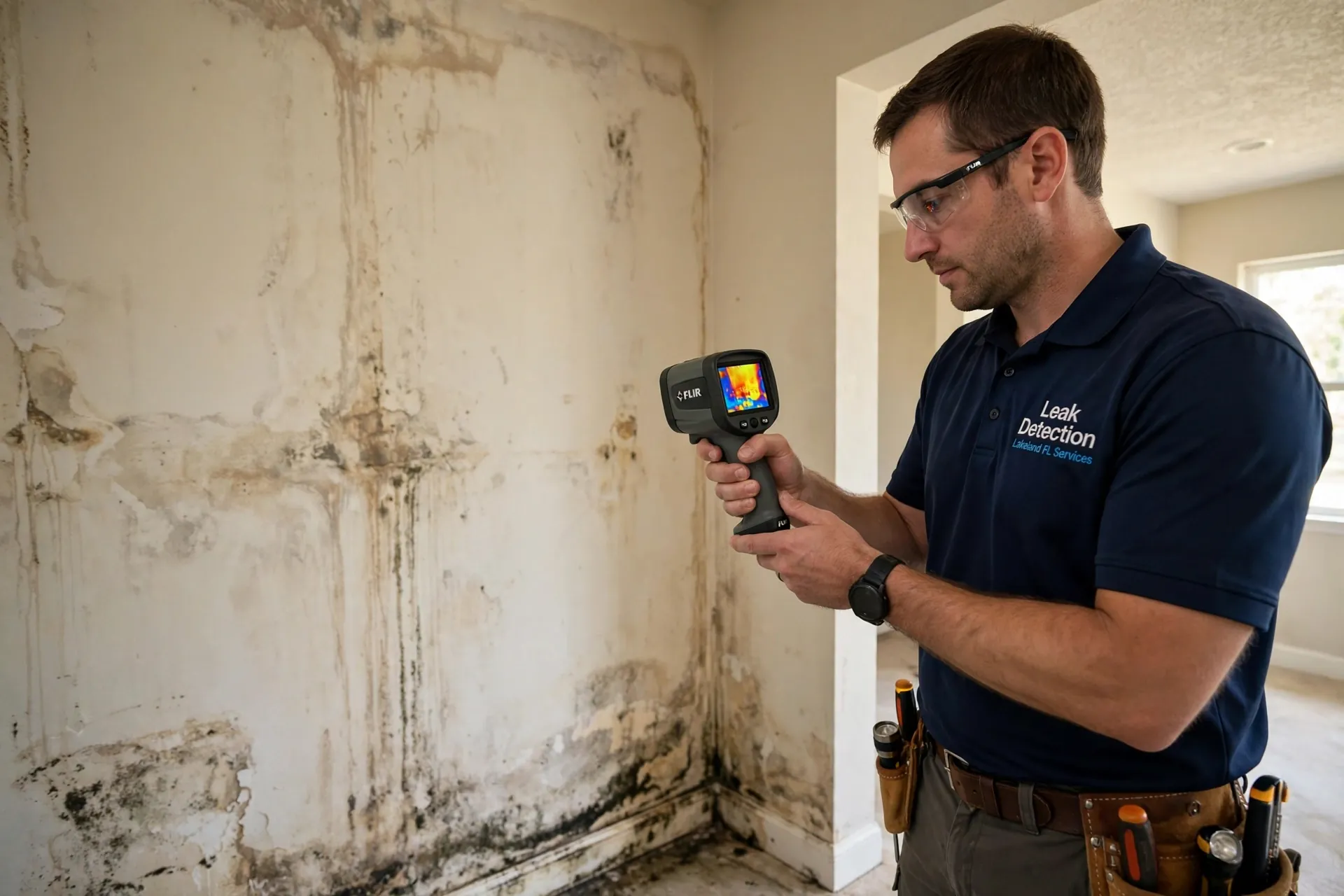
Once the leak is found, the repair depends on where the water is leaving. A crack in the plaster, a joint that has opened, a worn fitting, or a line that will not hold pressure each point to a different fix.
A small crack in the finish may need only a patch, while a crack that runs into the shell, or one that keeps growing, needs a closer look from a pool contractor. We talk through what we found with you once the leak is found, and you decide the next step.
Answers about pool structural leaks, from the signs to the visit itself.
A spa that shares water with a pool, or stands on its own. Jets, seals, and the equipment pad are the places to check.
View Spa Leak DetectionLeaks in buried lines under the yard. Listening gear finds the spot without opening the whole lawn.
View Underground Leak DetectionLeaks you cannot see, behind walls or under floors. Meters and imaging narrow the search.
View Hidden Leak DetectionLeaks across the plumbing in a home, from supply lines to fixtures. We check the system line by line.
View Plumbing Leak DetectionLeaks in the pipes themselves, from worn joints to corroded runs. We test the pipe that shows the signs.
View Pipe Leak DetectionLeaks in the water lines that feed the home. Yard signs and pressure changes point the way.
View Water Line Leak DetectionWe invite you to reach out for any Leak Detection needs. Our team is available to answer your questions and provide assistance. We typically respond within an hour.
Phone
+1 (863) 265-8125Address
3228 US Hwy 98 N, Lakeland, FL 33805, USA
Hours
Mon–Fri: 7AM – 7PM
Sat: 8AM – 4PM
Sun: Emergency Only
24/7 Emergency Available